

MATHS
Intent:
Mathematics is an important and creative discipline that helps us to understand and change the world.
We want all pupils at Husthwaite to experience the enjoyment and power of mathematics and develop a sense of curiosity about the subject with a clear understanding.
At Husthwaite, we build up positive ‘can do’ attitudes and we promote the fact that ‘We can all do Maths!’
We believe that all children can achieve in Mathematics and teach for a secure and deep understanding of mathematical concepts through manageable steps. We use mistakes and misconceptions as a vital part of learning and provide challenge through rich and sophisticated problems.
We aim to ensure that all pupils:
- Become fluent in the basics of mathematics so they develop a secure, conceptual understanding and the ability to recall and apply knowledge rapidly and accurately.
- Be able to solve problems by applying their mathematics to a variety of problems with increasing difficulty, including in unfamiliar contexts or real- life situations.
- Reason mathematically by following a line of enquiry and develop and present a justification, argument or proof using accurate mathematical language.
- Have an appreciation of number and number operations, which enables mental calculations and written procedures (or methods) to be carried out efficiently, fluently and accurately to be successful in mathematics.
Implementation:
Maths at the Husthwaite and Sessay CE Primary Federation is taught using the White Rose scheme, which is supplemented by other materials where required. From EYFS to Y6 we follow the small steps approach within the scheme, which is based on the national curriculum. Lessons can be personalised the needs of the class but coverage is maintained.
Fluency
Fluency of number and calculations forms part of our daily diet of maths. This is primarily delivered through the Mastering Number and Fluency Times Table programmes. Across the federation, Mastering Number aims to secure firm foundations in the development of good number sense for all children from Reception through to Year 1, Year 2 and Year 3. The aim over time is that children will leave KS1 with fluency in calculation and a confidence and flexibility with number. At Husthwaite, children in Class 3 will begin Mastering Number at KS2. Knowledge of multiplication and division and its applications forms the single most important aspect of the KS2 curriculum and is the gateway to success at secondary school. Mastering Number at KS2 enables pupils in Years 4 and 5 to develop fluency in multiplication and division facts, and a confidence and flexibility with number that exemplifies good number sense. Whilst at Sessay, children in KS2 will take part in the Clare Christie Times Tables. Here children learn fluency in multiplicative concepts and fluency in recall before being taught strategies to help construct and deepen children’s conceptual understanding of times tables.
Concrete, Pictorial and Abstract (CPA)
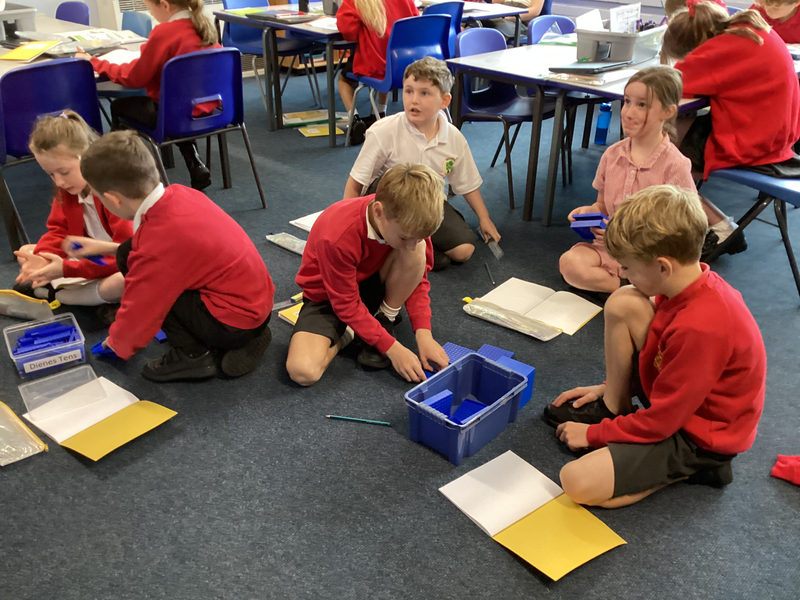
When concepts are taught children will have access to concrete materials. The types of concrete apparatus we use in class can be seen in our calculation policy. Maths manipulatives allow children to have a deeper understanding of concepts, to give meaning to those concepts and to more readily make connections. Through the steps of learning children will then be exposed to pictorial and abstract forms of the mathematical concept they are learning about in order to master each step of learning.
Online Tools
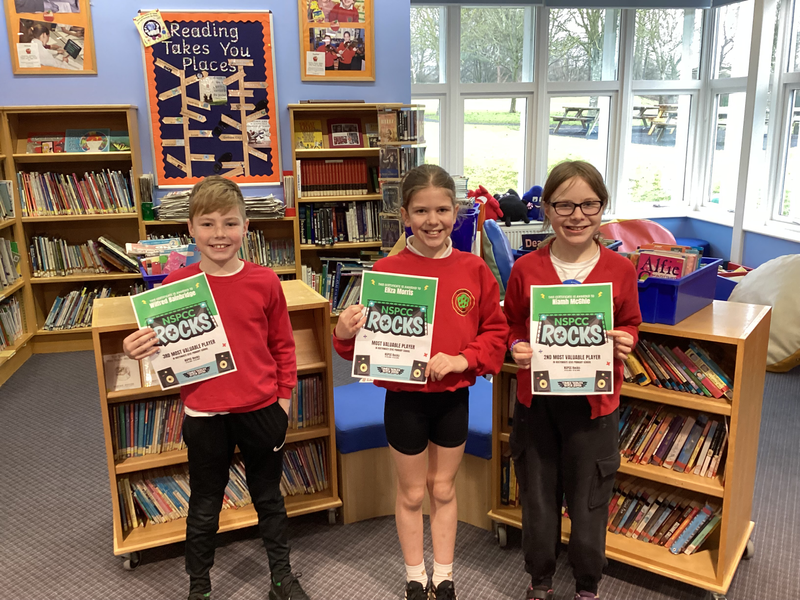
Additional online tools, such as Times Tables Rock Stars, allow children to practise recall of number facts.
Assessment
Assessment, as in all subjects, falls into two categories: formative and summative. The formative assessment within the class and through feedback, both written and oral. Summative assessment is done through the end of units using the White Rose Maths End of Block Assessments as well as end of term assessments, which are standardised. This feeds back into teachers’ planning and future learning.
Whole School Events
Whole school events raise the profile of maths within school and allow children to further develop their love of maths. Some examples of whole events are:
- NSPCC Number Day
- Times Table Rock Stars tournaments
- Census Day
Cross-curricular
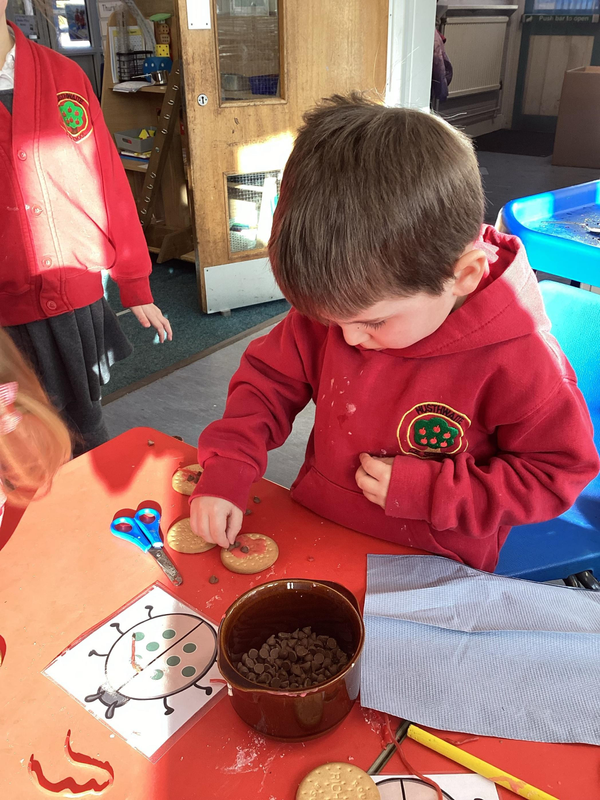
Staff are encouraged to include maths across the curriculum, showing its application in all aspects of life. e.g. statistics in science/geography or in food technology.
Impact:
The impact of our mathematics curriculum is that children understand the relevance and importance of what they are learning in relation to real world concepts. Children know that maths is a vital life skill that they will rely on in many areas of their daily life. Children have a positive view of maths due to learning in an environment where maths is promoted as being an exciting and enjoyable subject in which they can investigate and ask questions; they know that it is reasonable to make mistakes because this can strengthen their learning through the journey to finding an answer. Children are confident to ‘have a go’ and choose the equipment they need to help them to learn along with the strategies they think are best suited to each problem. Our children have a good understanding of their strengths and targets for development in maths and what they need to do to improve. Our maths books evidence work of a high standard of which children clearly take pride; the components of the teaching sequences demonstrate good coverage of fluency, reasoning and problem solving. Our feedback and interventions support children to strive to be the best mathematicians they can be.


