
History
History Intent
Our curriculum is guided by the following academic fingerprint:
Children will:
Have secure knowledge and understanding of the past, on a local, national and global
- Have a coherent chronological understanding, be able to analyse sources and weigh evidence, and confidently enquire and ask perceptive questions about the past.
- Become confident in their understanding of key historical concepts (disciplinary knowledge), including continuity and change, cause and consequence, similarity, difference, sources and evidence, interpretation and significance.
- Use their knowledge and understanding to make connections, create historically valid questions and create structured accounts, including, but not limited to, written responses.
- Grow in their curiosity and enthusiasm about the past and use this to understand the diversity of different cultures and societies, as well as their own identities.
We have carefully designed a knowledge-rich curriculum, underpinned by a progression of skills. Wherever possible, knowledge has been organised chronologically, to allow children to develop a clear chronological understanding of the past. The knowledge and skills build incrementally so that by the end of Key Stage 2 children can know, understand and apply the subject content taught, and be fully prepared for their secondary school History learning.
History Implementation
Our history curriculum has been supported by the Kapow scheme of work. History at the Husthwaite and Sessay CE Primary Federation is integrated into our curriculum through half termly topics. It is taught discretely and is woven throughout other subjects across the curriculum. It follows the spiral curriculum model where previous skills and knowledge are returned to and built upon. For example, children progress by developing their knowledge and understanding of substantive and disciplinary concepts by experiencing them in a range of historical contexts and periods.
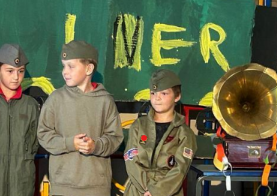
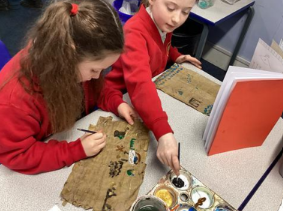
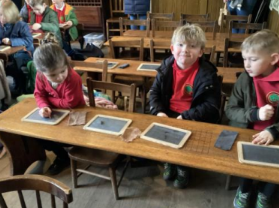
Knowledge organisers are used at the start of topics to identify the key vocabulary and knowledge that will be used throughout the half term. Hands on, practical experiences are provided to the children as regularly as possible. Visits and visitors are carefully selected termly to enhance the history curriculum. Opportunities to explore local history through learning inside and outside the classroom supports children in understanding their own place in history. IT is used to inspire and enrich our history curriculum and build on skills such as researching.


